Under the directives of UAE President Sheikh Mohamed bin Zayed Al Nahyan, His Highness Sheikh Mohammed bin Rashid Al Maktoum announced a framework to transform 50% of government sectors, operations, and services through Agentic AI within two years. One of the most ambitious national AI mandates in the world.
But ambition at that scale raises an immediate and practical question: what does responsible execution actually require?
Deploying AI agents across government operations is not a procurement exercise. It demands governance frameworks that are technically enforceable, validation mechanisms that work on systems whose internals you cannot fully observe, and sovereign infrastructure that keeps national data and operations under national control.
At Digital Readiness Retreat 2026, Open Innovation AI addressed these questions directly as Sovereign AI Partner of the event. Dr. Abed Benaichouche, Co-Founder and CEO of Open Innovation AI, delivered a keynote exploring the technical and operational foundations the mandate demands.
You can watch the full session here:
The Scale Problem
The 50% mandate is not a one-to-one mapping of human employees to AI agents. That framing underestimates the scale involved.
A single government employee coordinating with AI agents does not need one agent. Depending on the complexity and volume of their work, they may interact with dozens, each handling specific tasks, retrieving information from different systems, executing defined steps in a larger workflow. When you apply that multiplier across government operations serving a population of 10 to 13 million, the deployment target moves quickly into the hundreds of millions of agents. Potentially beyond one billion, depending on scope.
That is not a product deployment. It is a national infrastructure challenge. And it requires the same level of structural thinking that the UAE applied to its physical and digital infrastructure over the past two decades.
The Three Pillars the Mandate Demands
1. Governance: Standards and Readiness
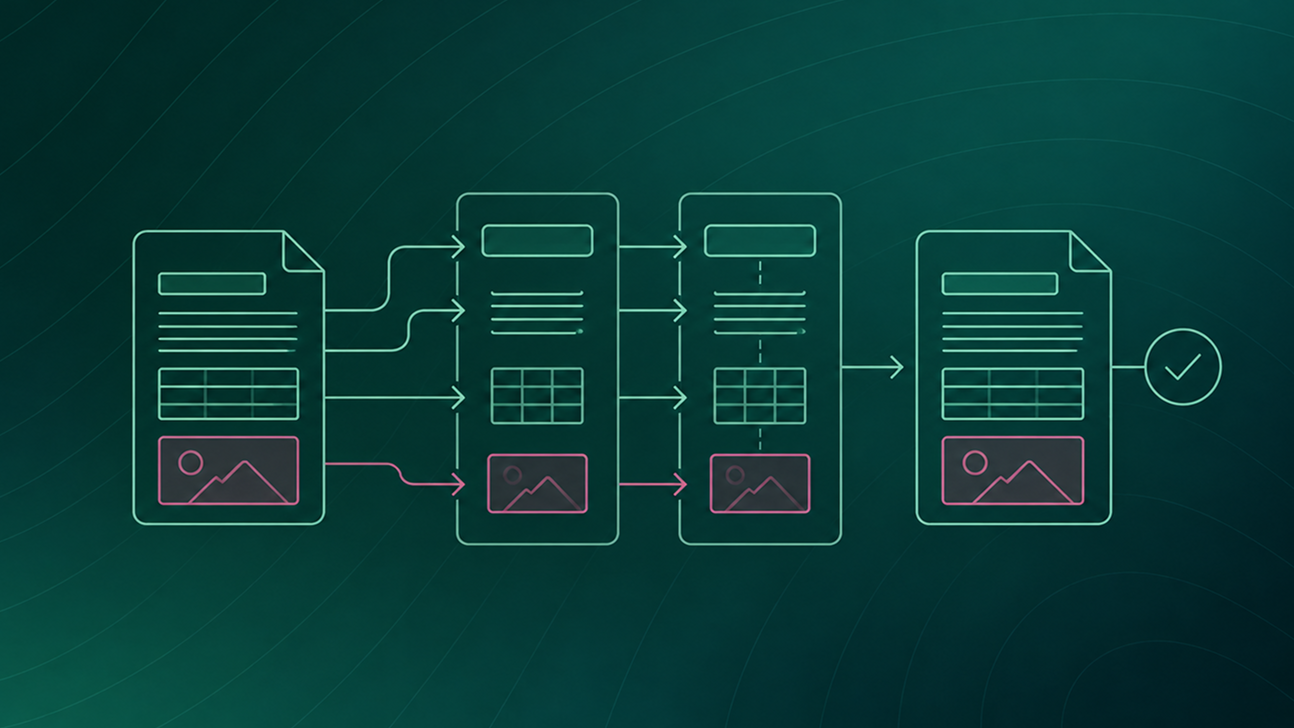
Policy documents do not govern AI systems. An LLM or agent will not read a compliance framework, interpret it correctly, and self-correct. Governance has to be embedded into the tools, pipelines, and operating environment from the start.
This requires two foundations: a clear view of each organization’s AI readiness, and operational controls that enforce policy at the point of execution.
The AI Maturity Index, developed in alignment with the UAE Cyber Security Council, addresses the first. It assesses organizations across technology readiness, human capital, data infrastructure, and operational capability, creating a practical roadmap grounded in UAE laws, standards, and operating realities.
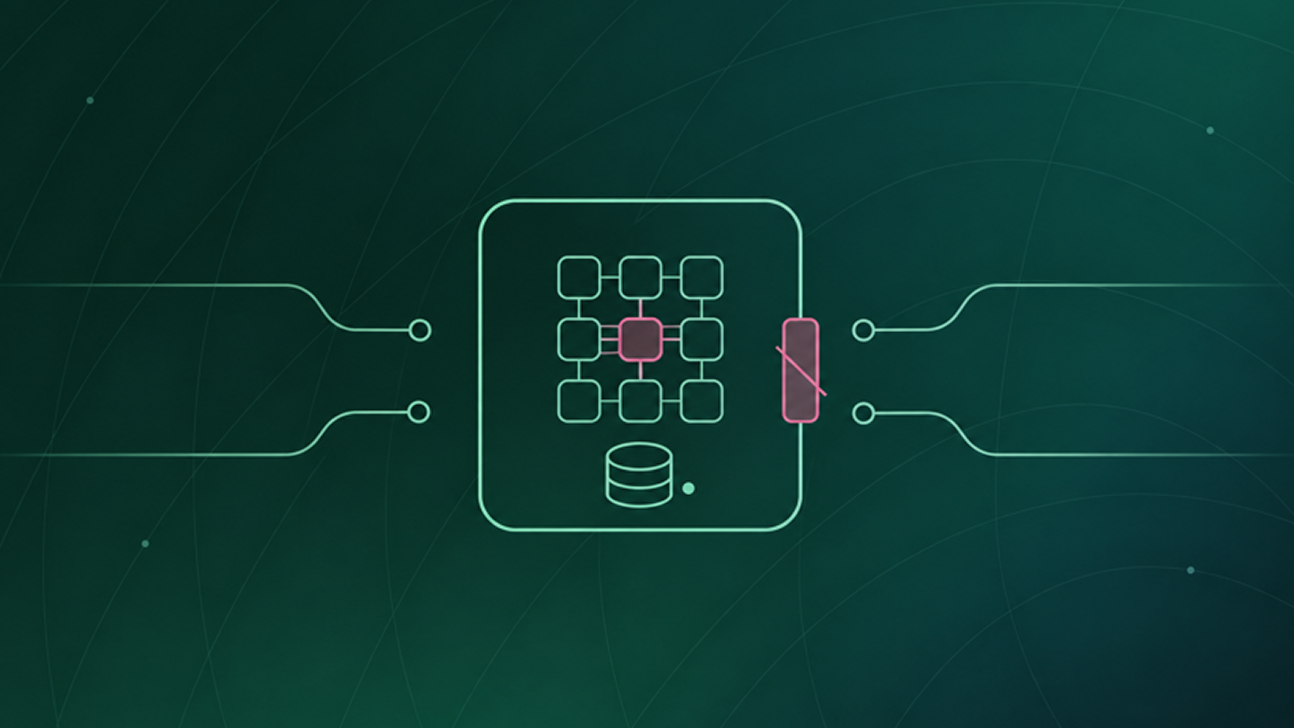
The second is enforced through guardrails: policy controls built directly into the model and agent environment, so compliance becomes a continuous runtime condition, not a checkbox.
For the 50% mandate to succeed, governance cannot be retrofitted after deployment. It has to be built in from day one.
2. Validation: Testing, Certification, and Monitoring
Validation is where the mandate becomes technically complex.
LLMs and AI agents do not behave like traditional software. Their outputs can vary, their reasoning is not fully visible, and their behavior must be tested continuously against clear policy standards.
This is exactly the role of the UAE National Test and Validation Lab, established by the UAE Cyber Security Council, Open Innovation AI, and Cisco, and powered by OI AI Security. The lab assesses LLMs, agents, and MCP tools against UAE policy standards, identifies compliance gaps, and applies targeted remediation through guardrails before deployment.
This matters because even small gaps become unacceptable at national scale. Public models may reach high compliance scores, but 94% or 97% is not enough for critical government services.
Validation also cannot stop at launch. AI systems can drift, degrade, or respond unpredictably to adversarial inputs. That is why OI AI Security extends validation into runtime through AI SOC capabilities that monitor agent behavior, guardrail compliance, output deviations, and risk signals in real time.
3. Deployment: Sovereign Infrastructure
Governance and validation only work when the operating environment is controlled. A governed agent running on uncontrolled third-party infrastructure is not truly governed.
Sovereign infrastructure means the full AI stack, from GPU compute and model hosting to RAG pipelines, tool integrations, observability, and guardrails, operates within national boundaries and under national control.
This is the role of the Open Innovation AI and du partnership, announced at Digital Readiness Retreat 2026. It combines Open Innovation AI’s sovereign AI platforms with du Tech’s National Hypercloud to provide government entities and enterprises with an isolated, sovereign environment for large-scale agentic deployment.
From Pillars to Execution
The three pillars define the foundation: governance sets the standard, validation proves compliance, and sovereign deployment turns it into operational reality.
But national-scale agentic AI also requires structure. Government work is not flat. It involves multi-step services, cross-department coordination, policy reviews, knowledge retrieval, reporting, approvals, and exception handling.
That is why an agentic workforce cannot be built as a collection of disconnected agents. It needs a governed hierarchy: specialist agents for defined tasks, coordinating agents for workflows, and supervisory agents for broader processes and escalation.
This hierarchy must inherit the same controls defined by the three pillars. Every layer needs clear policies, validation, monitoring, auditability, and a sovereign operating environment.
At this scale, success is not measured by how many agents are deployed. It is measured by whether those agents are structured, governed, validated, and operated safely.
The Execution Path Is Clear
The mandate does not require organizations to deploy everything at once, or to “agent” every process immediately. It requires them to understand their own needs, identify where AI can create the most value, and move with discipline.
The right path starts with prioritization. Organizations should apply the 80/20 rule: focus first on the 20% of use cases that can deliver 80% of the operational impact. These are often the workflows that are already structured, digitized, data-ready, repetitive, or high-volume enough to benefit quickly from AI.
At the same time, organizations should prepare the rest of their operations in parallel. Some processes may be ready for agents today. Others may first require cleaner data, clearer ownership, better system integration, or stronger governance before they can be safely automated.
Speed matters. The UAE’s ambition is built on execution, not delay. But speed only creates value when it is focused and governed.
Deploying hundreds of agents without understanding the organization’s real needs, readiness, risks, and value priorities is not progress. It creates complexity at scale.
Responsible execution means moving fast, but moving through the right sequence: understand the need, prioritize the highest-value use cases, assess readiness and risk, validate and certify the models and tools, then deploy them inside a sovereign environment.
What Responsible Execution Looks Like
Realizing the UAE’s 50% Agentic AI mandate requires more than adopting AI tools. It requires a national execution model.
Organizations need a maturity baseline to understand where they stand, governance frameworks to define how agents should operate, validation mechanisms to test and certify models before deployment, runtime monitoring to detect risk, sovereign infrastructure to keep operations under national control, and an agentic hierarchy that reflects how government work actually happens.
These foundations already exist. The question is whether organizations will build on them from the start, or move quickly and assume governance can follow later.
It cannot. For agentic AI to succeed at national scale, governance, validation, and sovereignty must be built in from day one.

Intissar El mezroui
Product Marketing Manager